Best portable chargers for a long-haul flight
The airline rules rule out a good part of the market before performance enters into it. The watt-hour limit, and what it means in practice.
3 products ranked Updated
Our rankings are built from published testing by named outlets, not from our own lab. We earn a commission when you buy through our links, and it never changes the order.
The short answer
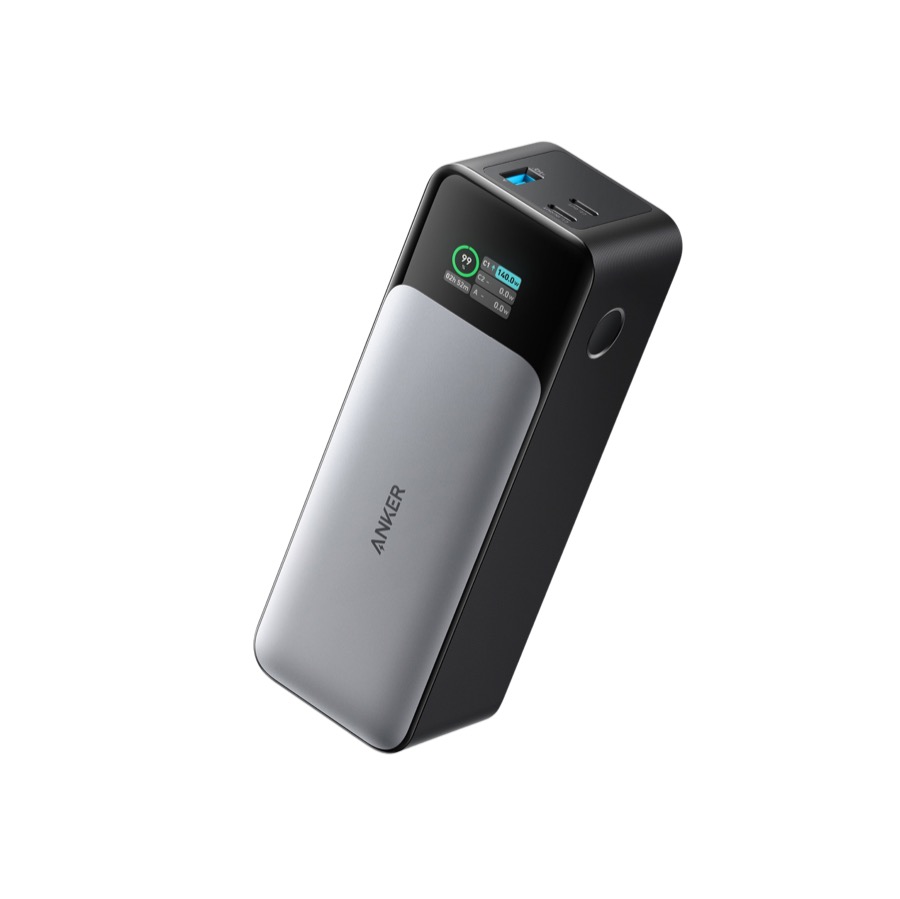
- 1 Anker 737 Power Bank (PowerCore 24K) Best for a laptop, and legal to fly $109.99
- 2 Anker MagGo Power Bank (10K, Slim) Best for a phone $79.99
- 3 Anker 548 Power Bank (PowerCore Reserve 192Wh) Do not take this on a plane Not priced here — see below
Prices checked 9 September 2026. They move constantly — the retailer's own page is the authority.
Anker 737 Power Bank (PowerCore 24K)
4.5 / 5
Our reading of TechRadar — sustained steady voltage at 140 W and held 89% of capacity at a 100 W draw in their testing , 2026
24,000 mAh works out at about **88.8 Wh** — under the 100 Wh cabin limit, with room to spare, and enough to charge a laptop rather than just a phone. That combination is rarer than it sounds: most packs big enough for a laptop are over the limit. An 89% efficiency at 100 W is unusually good; the ordinary figure is nearer 70%.
Pros
- About 88.8 Wh — comfortably under the 100 Wh cabin limit
- 140 W is enough for a MacBook Pro at full charging speed
- 89% of capacity delivered at 100 W, against a typical 70%
Cons
- $109.99, and it is heavy
- Overkill if you only ever charge a phone
- Capacity
- 24,000 mAh (about 88.8 Wh)
- Max output
- 140 W
Where these findings come from
- TechRadar: 140 W output confirmed, rock-steady voltages charging a MacBook Pro at full speed; 89% capacity retained at 100 W; full recharge in under an hour
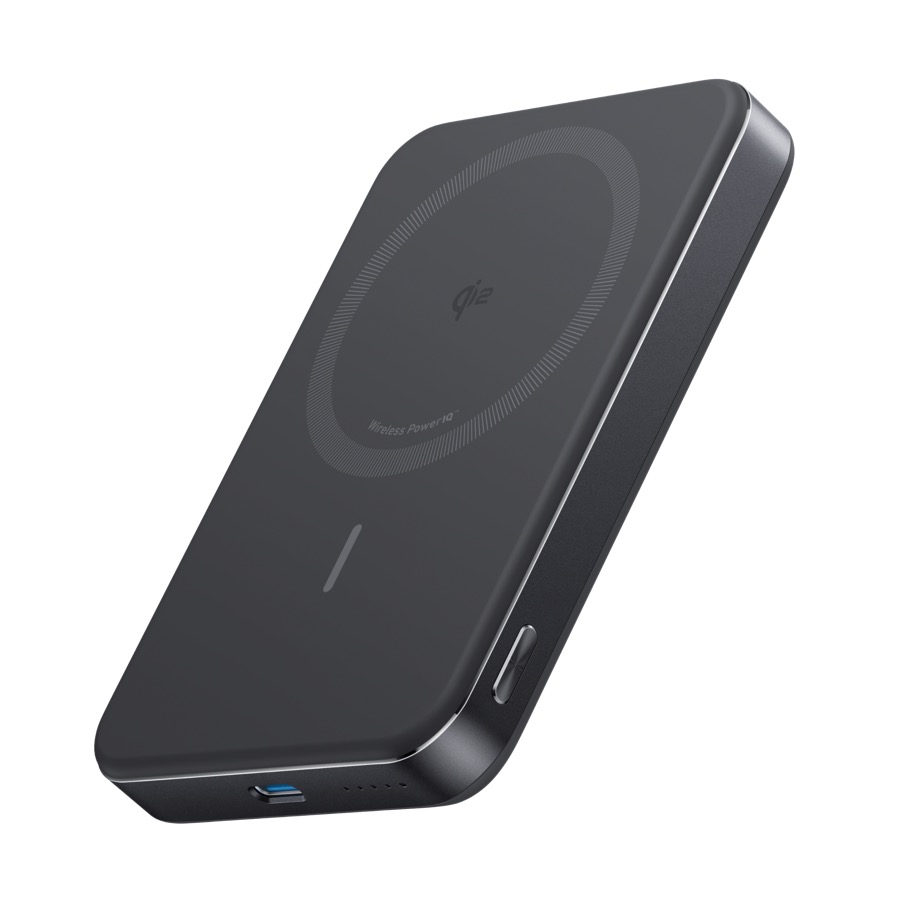
Anker MagGo Power Bank (10K, Slim)
4 / 5
Our reading of TechRadar — among the fastest MagSafe packs they tested, charging an iPhone in under two hours , 2026
10,000 mAh is about **37 Wh**, so it is nowhere near the limit and no airline will look twice at it. Slim enough to sit in a seat pocket, and it sticks to the back of the phone rather than needing a cable across the tray table. One full phone charge and a bit, not a laptop.
Pros
- About 37 Wh — far under the cabin limit
- Magnetic, so no cable across the tray table
- 15 mm thick
Cons
- $79.99 for 10,000 mAh is premium
- Wireless charging is less efficient than a cable
- Capacity
- 10,000 mAh (about 37 Wh)
- Output
- 30 W USB-C, 15 W wireless
Where these findings come from
- TechRadar: one of the fastest MagSafe power banks tested; charges an iPhone in under two hours from its 10,000 mAh
Anker 548 Power Bank (PowerCore Reserve 192Wh)
This entry is a warning, not a recommendation, and it carries no rating because we are not rating it. Anker names it **PowerCore Reserve 192Wh** — their own published figure, in the product name — against the 100 Wh most airlines allow without prior approval and the 160 Wh above which lithium batteries are banned from aircraft outright. It is an excellent pack for camping. Take it to an airport and it will be taken off you at security, and you will have paid for the privilege.
Pros
- Genuinely useful away from mains power, for days
Cons
- 192 Wh — nearly double the 100 Wh cabin allowance
- Above 160 Wh, which is the outright ban threshold
- Cannot go in checked baggage either: lithium batteries must fly in the cabin

The rule that decides this
Lithium batteries in cabin baggage are capped by most airlines at 100 watt hours without airline approval. Above that you need permission; above 160 Wh they are banned outright.
Chargers are advertised in milliamp hours, not watt hours, which obscures the comparison. The conversion is:
Wh = (mAh / 1000) x 3.7
So a 26,800 mAh pack is about 99 Wh and just legal. A 30,000 mAh pack is about 111 Wh and is not, regardless of what the listing says. This is the first filter, and a lot of popular recommendations fail it.
What actually matters
Real capacity, not printed capacity. Conversion losses mean you get roughly 60 to 70 per cent of the printed figure into a phone. A pack that delivers close to 70 is doing well.
Output wattage per port, and whether it is shared. Many packs advertise a high total that collapses when two devices are plugged in.
Pass-through charging if you want to charge the pack and a phone together from one socket.
Where this comes from
We do not test chargers. Our source runs them down into real devices and reports delivered watt-hours against printed capacity, which is the number that matters and the one nobody prints on the box — they measured one pack delivering 32 Wh of an available 36, a 13.5% conversion loss they call better than average.
The watt-hour figures below are arithmetic, not claims: capacity in mAh divided by 1000, multiplied by 3.7. You can check every one of them on a calculator, which is the point. Where a manufacturer publishes a watt-hour figure itself, we use theirs and say so.
What we are leaving out
Anything over 100 Wh, and anything without a published cell capacity.
Where this comes from
We did not test these. These people did.
Every score on this page rests on the testing below. The ranking is ours; the measurements are not. How we research.
- TechRadar — Runs packs down into real devices and reports delivered watt-hours against printed capacity, including conversion losses.
Questions people ask
Can I put a power bank in checked luggage?
How do I work out the watt hours of mine?
More guides

Best checked luggage for long-haul flights
Checked luggage for long-haul flights needs to roll cleanly, shrug off drops, and pack without wasting space. Good Housekeeping and OutdoorGearLab both favor sturdy, easy-to-handle bags, but they also flag real tradeoffs: weight, size, and durability vary.
5 picks Updated

Best LED bulbs for warm light
Warm light is mostly about Kelvin, not the word “soft white” on the box. The strongest pick here is Consumer Reports’ 2700K GE bulb, while Tom’s Guide backs the basic rule that 2700K gives a warm glow. Smart bulbs can work too, but only if they can dim all the way down into the warm range.
3 picks Updated

Best stand mixers if you bake twice a month
If you bake twice a month, a stand mixer should be a convenience, not a burden. The best choices here are the smaller all-purpose models that handle whipped cream, cake batter, and cookie dough without much fuss. Bread specialists are better left to people who bake a lot of bread.
4 picks Updated