Best coffee grinders under $200
Burr beats blade, and that part is settled. What $200 buys on top of that is consistency and range, and the cheap burr grinders that fail on both.
3 products ranked Updated
Our rankings are built from published testing by named outlets, not from our own lab. We earn a commission when you buy through our links, and it never changes the order.
The short answer
- 1 Baratza Encore ESP Best overall $199.95
- 2 Breville Smart Grinder Pro Easiest to use $199.95
- 3 Capresso Infinity Conical Burr Grinder Cheaper, with a real drawback
Prices checked 14 September 2026. They move constantly — the retailer's own page is the authority.
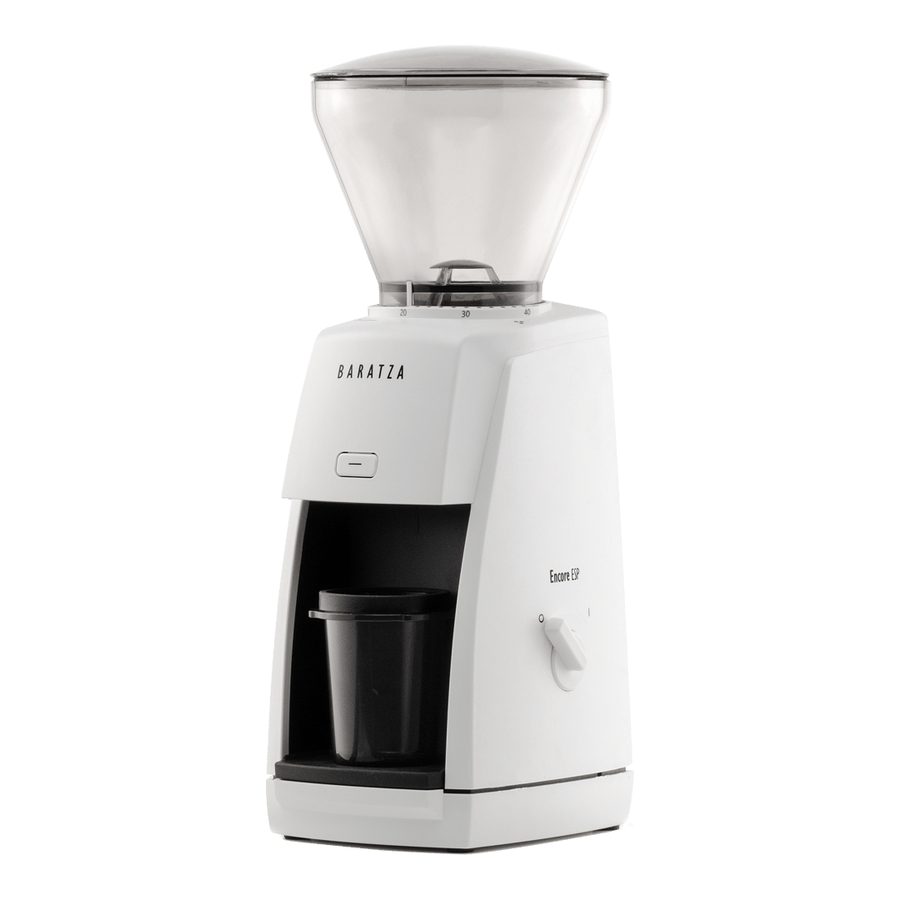
Baratza Encore ESP
4.5 / 5
Our reading of America's Test Kitchen — Highly Recommended and their winner , 2025
The winner of a test that measured what matters: how evenly it grinds, sieved rather than eyeballed, and whether the coffee lands in the range the Specialty Coffee Association recommends. It did both, and it splits its 40 settings so that half are fine steps for espresso and half cover filter brewing. Baratza sells the parts, so a worn burr is a repair rather than a replacement.
Pros
- Among the most consistent grinds in the test
- 20 fine settings for espresso, 20 for filter
- Replaceable parts sold by the maker
Cons
- $199.95, at the very top of this budget
- Fewer fine steps than a dedicated espresso grinder
- Burrs
- 40 mm steel conical
- Settings
- 40
Where these findings come from
- America's Test Kitchen: winner; 40 settings, 20 of them fine steps for espresso; one of the most consistent grinders tested, with a high share of medium-size grounds
- America's Test Kitchen: TDS reading of 1.33, within the Specialty Coffee Association range of 1.15 to 1.35 percent; replacement parts sold by Baratza
Breville Smart Grinder Pro
4 / 5
Our reading of America's Test Kitchen — Recommended , 2025
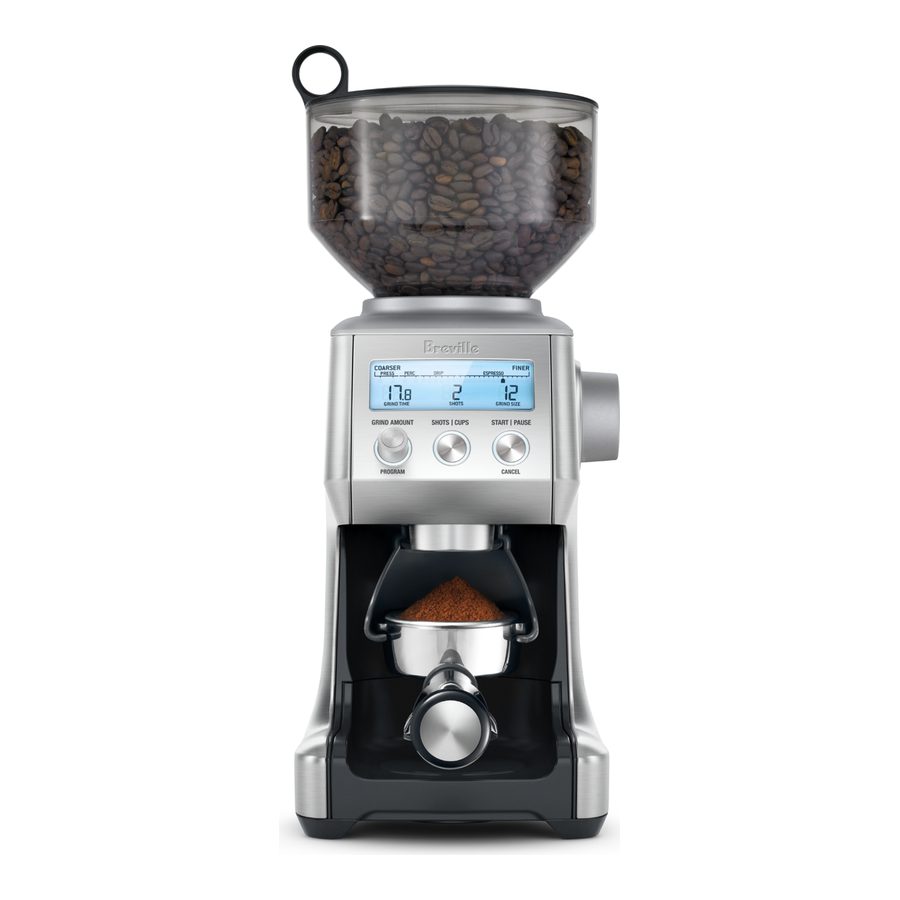
The same price as the Baratza and the friendlier machine: a screen walks you through grind size and dose, and a cradle holds an espresso portafilter under the chute. The coffee landed in the recommended range. Where it lost ground to the winner is tidiness, with more grounds scattered on the counter over the course of testing.
Pros
- Screen guides grind size and dose
- Portafilter cradle included
- Burr comes out easily for cleaning
Cons
- Messier than the Baratza, per the test
- $199.95
Where these findings come from
- America's Test Kitchen: Recommended; one of the easiest to operate, with a screen that guides grind size and servings; brewed within the recommended TDS range
- America's Test Kitchen: comes with a portafilter cradle; easy to remove the burr for cleaning; left more stray grounds on the counter than some
Capresso Infinity Conical Burr Grinder
3 / 5
Our reading of America's Test Kitchen — Recommended with Reservations , 2025
Here because it is the burr grinder people buy when $200 feels like too much, and because the test found the problem with it. Its coffee measured consistently weaker than the recommended minimum, and it scattered grounds. It is still a burr grinder and still better than a blade. If you can stretch to either pick above, do. No price and no photograph: our source quotes none, and Capresso's site refuses us even in a browser.
Pros
- Burr grinding for much less money
- Compact, fits under cabinets
Cons
- Brewed below the recommended strength range in testing
- Only 16 settings
- Messy, and no verified price or image
Where these findings come from
- America's Test Kitchen: Recommended with Reservations; 16 settings; compact enough to fit under a cabinet
- America's Test Kitchen: TDS readings were consistently below the 1.15 percent minimum for brewed coffee; stray grounds went all over the counter

What actually matters
Consistency, which you can measure. Ground coffee falls into three sizes: even medium pieces, large boulders that under-extract into weak coffee, and fines that over-extract into bitterness. A good grinder produces mostly the middle size. Our source sifted grounds through barista sieves to measure exactly that, rather than judging by eye.
Enough settings for the way you brew. Ten settings covers drip, pour-over and French press. Espresso needs many small steps at the fine end, roughly 40 settings or more, because a tiny change in grind changes the shot.
A heavy base. Grinders under about 5 lb rattle and can walk across the counter when grinding a full hopper.
Parts you can buy. Burrs wear. A maker that sells replacement burrs turns a dead grinder into a cheap repair.
Conical or flat burrs does not matter much. Our source tasted no difference between coffee from the two designs. Conical burrs are cheaper, and every top pick uses them.
Where this comes from
We do not test grinders. Our source ground 110 lb of coffee, sifted the results to measure evenness, measured the strength of each brew with a refractometer, and held tastings with professional roasters. Where this page mentions the recommended strength range, that is the Specialty Coffee Association's figure of 1.15 to 1.35 percent dissolved solids.
What we are leaving out
Blade grinders, which cannot grind evenly. The Fellow Opus, recommended in the same test, has since been replaced by an Opus 2 our source has not reviewed. And dedicated espresso grinders, which cost more than this guide's ceiling.
Where this comes from
We did not test these. These people did.
Every score on this page rests on the testing below. The ranking is ours; the measurements are not. How we research.
- America's Test Kitchen — 110 lb of light, medium and dark roasts ground at several sizes; grounds sifted through Kruve sieves to measure consistency, brews read with a refractometer for total dissolved solids, and tasted with professionals from two roasters. Updated July 2025.
Questions people ask
Is a burr grinder really better than a blade grinder?
How often should I clean a burr grinder?
More guides

Best LED bulbs for warm light
Warm light is mostly about Kelvin, not the word “soft white” on the box. The strongest pick here is Consumer Reports’ 2700K GE bulb, while Tom’s Guide backs the basic rule that 2700K gives a warm glow. Smart bulbs can work too, but only if they can dim all the way down into the warm range.
3 picks Updated

Best stand mixers if you bake twice a month
If you bake twice a month, a stand mixer should be a convenience, not a burden. The best choices here are the smaller all-purpose models that handle whipped cream, cake batter, and cookie dough without much fuss. Bread specialists are better left to people who bake a lot of bread.
4 picks Updated

Best cutting boards for a dishwasher household
A dishwasher household needs boards that can take repeated wash cycles without warping, slipping, or becoming a nuisance to clean. The best picks here are the ones the outlets explicitly call dishwasher-safe, but each still has a catch: size, grip, or cutting feel.
5 picks Updated